


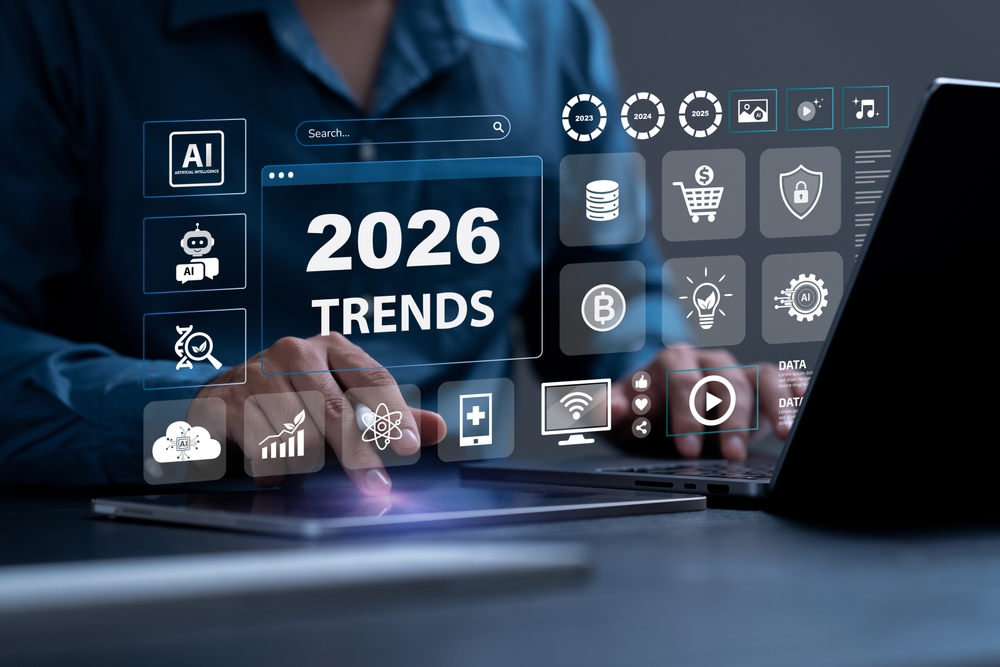
If your IT strategy still treats AI, automation, and security as “future concerns,” 2026 will arrive faster than your budget cycle.
The next wave of change is already built into the software you’re using every day. Automation no longer requires engineers or custom scripts. Security expectations are shifting to keep up.
Businesses that understand what’s coming can simplify operations, reduce risk, and move faster with fewer resources. Teams that don’t will feel like everything suddenly became harder overnight.
Let’s cut through the noise to focus on the 2026 IT trends you should realistically prepare for in 2026 and how the right small business IT solutions can help you adapt without overengineering or overspending.
AI Is Already in the Tools You Use
One of the most misunderstood shifts heading into 2026 is where AI actually lives.
It doesn’t have to be something you “add on.” AI is being embedded directly into accounting platforms, application tools, collaboration software, endpoint management systems, and even your Facebook account. That means businesses are using AI, whether they planned to or not.
Instead of jumping between separate tools, AI now works quietly in the background:
- Prioritizing tasks
- Flagging anomalies
- Suggesting next actions
- Reducing manual input
This is why business leaders should focus less on standalone AI products and more on how existing platforms are evolving. Evaluating small business IT solutions through this lens helps you see how the tools improve workflows without adding complexity.
Automation Is Simplifying Faster Than Expected
Once AI becomes embedded, automation naturally follows.
What’s different heading into 2026 is how accessible automation has become. No-code and low-code platforms allow small teams to automate workflows using plain language and drag-and-drop programming instead of scripts. That removes a major barrier that kept automation locked behind engineering resources.
This is where managed IT services increasingly shift from reactive support to strategic enablement. Instead of just fixing issues, providers design and maintain automation that fits workflows, stays secure against cyberattacks, and scales over time.
Security Requirements Are Already Non-Negotiable
As automation and AI expand, the barriers to entry get lower… for both the good and the bad.
Baseline protections like multifactor authentication, endpoint monitoring, immutable backups, and access controls are no longer optional. Customers, insurers, and regulators increasingly expect them by default.
Attackers know small businesses often fall behind here. That’s why phishing, credential abuse, and ransomware remain effective.
Modern security planning focuses on:
- Reducing attack surface
- Detecting issues earlier
- Limiting blast radius
- Recovering quickly
This is another area where managed services are increasingly important, especially for teams without full-time security. The goal isn’t perfection. It’s resilient security that keeps the business running when something goes wrong.
Questions IT Teams Are Already Asking
Are these trends realistic for small teams?
Yes. The biggest shift is that tools are being created with small teams in mind. Complexity is moving behind the scenes.
Do small businesses need enterprise-grade security now?
They need enterprise-informed security. The controls are lighter, but the expectations are real.
How should IT teams prioritize these trends with limited budgets?
Focus first on fundamentals, then look at AI and automation features already included in your existing tools. Incremental improvements often deliver more value than large, disruptive changes.
Plan Ahead Without Overengineering
The most important thing to understand about 2026 is this: nothing here is optional, and none of it is coming out of nowhere.
AI-driven tools, simplified automation, and stricter security expectations are already shaping how small businesses operate. The difference between success and struggle will come down to preparation, not adoption speed.
By investing in the right small business IT solutions and aligning with an experienced consultant, IT teams can turn these trends into advantages instead of obstacles.
The smartest move now is planning before pressure forces the decision.